01
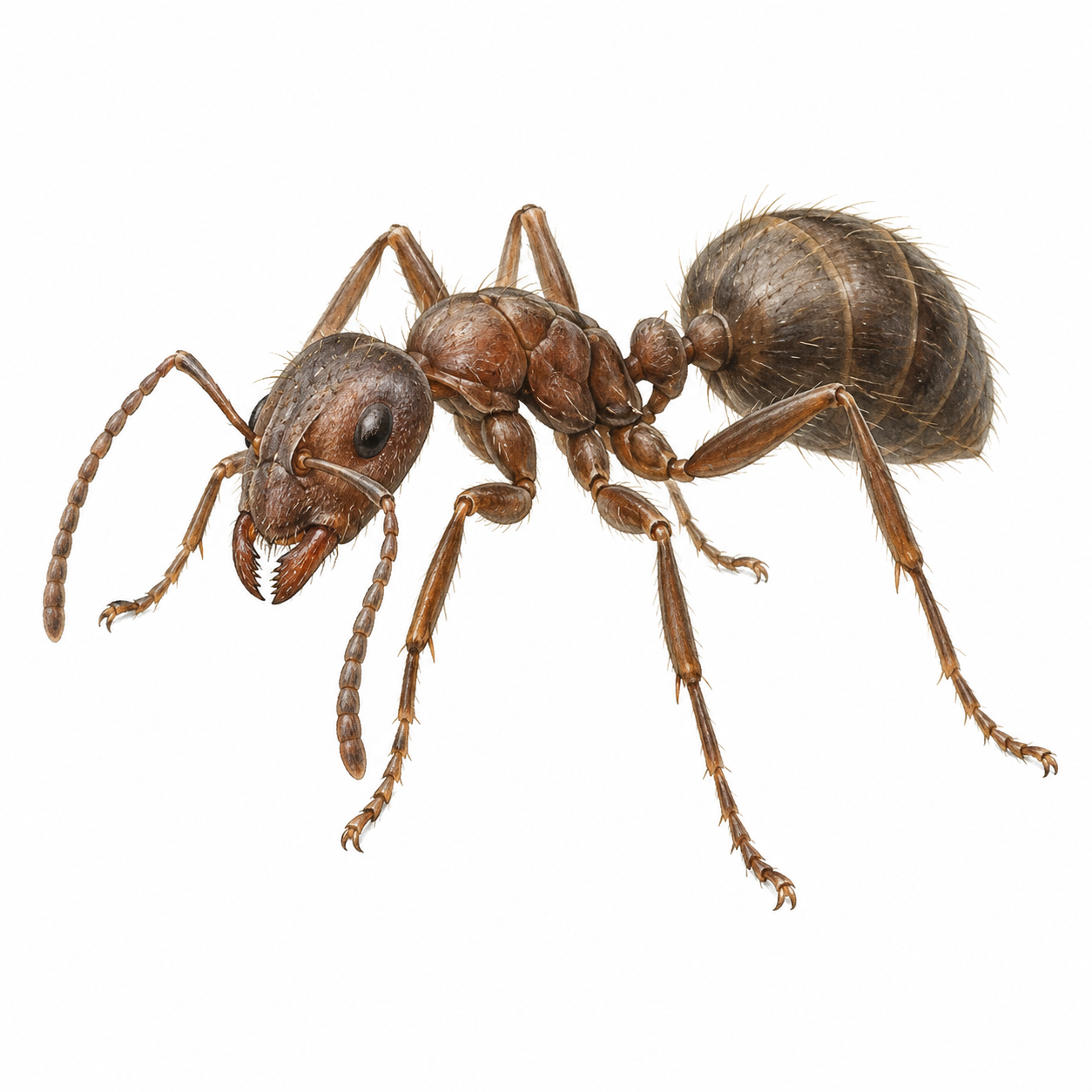
LEARN ABOUT ANTS
- WHERE?
- Around food, water and entry openings.
- WHEN?
- Depends on conditions; not confined to one season.
- WHAT SHOULD YOU DO?
- Trace entry routes and check food and water sources.
- WHICH SOLUTION?
- Surface application targeting ants.
WHY DOES IT MATTER FOR HEALTH?
Ants indoors are not in themselves a sign of disease. Access to open food and preparation surfaces is undesirable for hygiene; keep food covered and clean contact areas. Some species bite or sting, so do not handle an unidentified ant with bare hands. Managing food, water and entry points is the main aim.
Workers seeking food and water for the colony may reach crumbs, uncovered food and moisture indoors. Cracks, service penetrations and gaps around doors and windows can provide entry. Seeing ants alone does not establish how clean a home is.
Workers can share routes to food using chemical trails. This is why several ants may follow the same path. Following the trail can reveal an entry point and attractant; remove the food source as well as cleaning the surface.
Is dealing with a few visible ants enough?
The ants you see are only part of the colony. More workers may arrive if the food source and entry route remain. Regular monitoring, covering food and reducing access form a plan that goes beyond treating visible individuals.
How should you plan management at home?
First identify food, water and entry points. If insecticidal surface treatment is needed, use an ant-targeted product only in authorised areas. Do not treat food preparation surfaces or belongings that people directly contact as general application areas.