WHY DOES IT MATTER FOR HEALTH?
Brown marmorated stink bugs are not known to transmit disease to people and do not bite people or pets. Indoors, the main problems are nuisance and unpleasant odour. Crop damage is distinct from a risk to human health.

LEARN ABOUT PESTS / GUIDES
The brown marmorated stink bug is a shield-shaped insect that seeks sheltered places to overwinter in autumn. Indoor sightings usually reflect this seasonal behaviour. Prioritise sealing entry points and removing insects without crushing them.
Last updated: 7 October 2026
SEE SOLUTIONS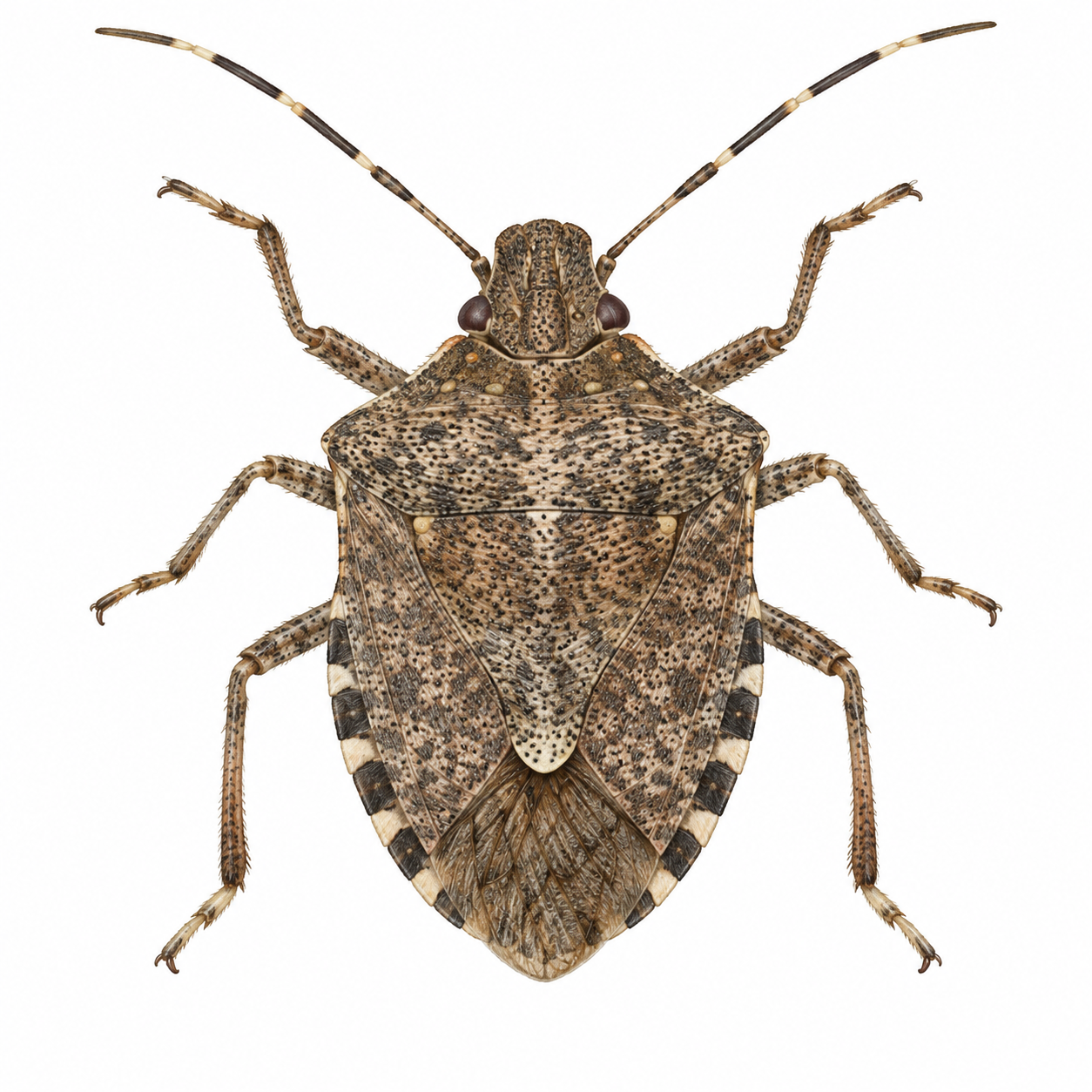
Brown marmorated stink bugs are not known to transmit disease to people and do not bite people or pets. Indoors, the main problems are nuisance and unpleasant odour. Crop damage is distinct from a risk to human health.
Halyomorpha halys is a mottled brown agricultural pest, approximately 1.5 cm long. Pale antenna bands and alternating colours along the body edges aid identification. Similar insects exist, so colour alone cannot confirm the species.
As the weather cools, they can enter through gaps in doors, windows and exterior walls. Individuals sheltering indoors for winter usually do not breed there; large numbers do not necessarily mean indoor reproduction.
They may release a defensive secretion when disturbed. Crushing can increase the smell, so prefer physical removal.
Cooling weather triggers the search for sheltered winter quarters. Check entry points before the season begins.
Reduce gaps around doors and windows; repair insect screens.
Check pipe openings and exterior wall cracks.
Remove insects without crushing them. If using a vacuum cleaner, bear in mind that odour may remain in the appliance.
For repeated heavy entry, assess the building’s entry points and seek expert help if needed.
Check that the label specifically lists brown marmorated stink bugs. A general reference to pests does not establish suitability for this target.
For this target, choose only surfaces permitted by the label. Do not treat people, animals, food or textiles that directly contact the skin as application areas.
Compare the target-specific application method and any stated duration. Do not transfer instructions between products or assume unverified durations.
Especially when buying online, check the biocidal authorisation number and date, active ingredient and instructions on the back label.
Choose a brown marmorated stink bug treatment for the target pest and application area.
Pest-control products from our company’s different brands are listed together by solution type to help you compare options for your needs.
Application to authorised surfaces where the target occurs.
Those entering homes to overwinter generally do not breed indoors. Seeing several individuals does not, by itself, establish indoor reproduction.
They do not bite people or pets. The main indoor problems are nuisance and defensive odour.
They seek sheltered winter quarters, particularly in autumn, and can enter through door, window and exterior wall openings.
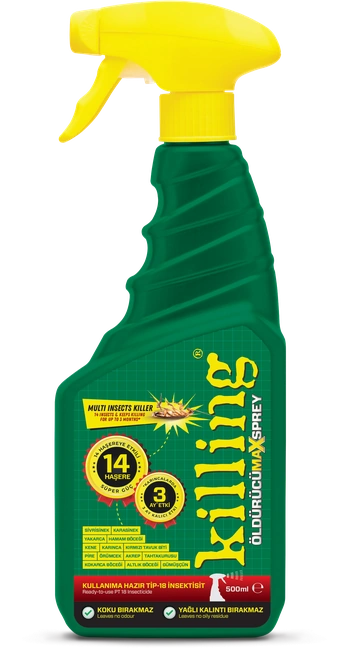
Killing Max Sprey is shown for this pest. Apply only to permitted surfaces following target-specific label instructions; do not borrow protection times from other pests.