01
IDENTIFY THE MOSQUITO
- SPECIES
- They do not all behave alike.
- WHEN?
- Daytime, evening or night, depending on the species.
- WHY ARE SOME PEOPLE BITTEN MORE?
- Mosquitoes use several signals, including CO₂, heat and individual skin odours.
- WHY DO BITES ITCH?
- Because of the body’s response to mosquito saliva.
WHY DOES IT MATTER FOR HEALTH?
Some infected mosquito species can carry pathogens such as West Nile virus, dengue, chikungunya or Zika. Different Aedes and Culex species can carry different pathogens. Risk depends on species, region and current circulation. Not every mosquito carries disease, and this does not mean all these diseases are widespread in Türkiye. The presence of Aedes alone does not establish disease transmission.
WHO — Vector-Borne Diseases ↗There are many mosquito species worldwide, with different habitats and active periods. Groups such as Culex and Aedes may behave differently, so protection should not be limited to evening hours.
Female mosquitoes feed on blood from people and animals. Finding us, feeding and the skin’s subsequent response are separate processes. Individual characteristics, as well as the species’ behaviour, can affect the experience.
Do mosquitoes bite only at night?
No. Some are mainly active in the evening and at night, while Aedes species can also bite during the day. Your surroundings and the species present affect when protection is needed.
What is the Asian tiger mosquito?
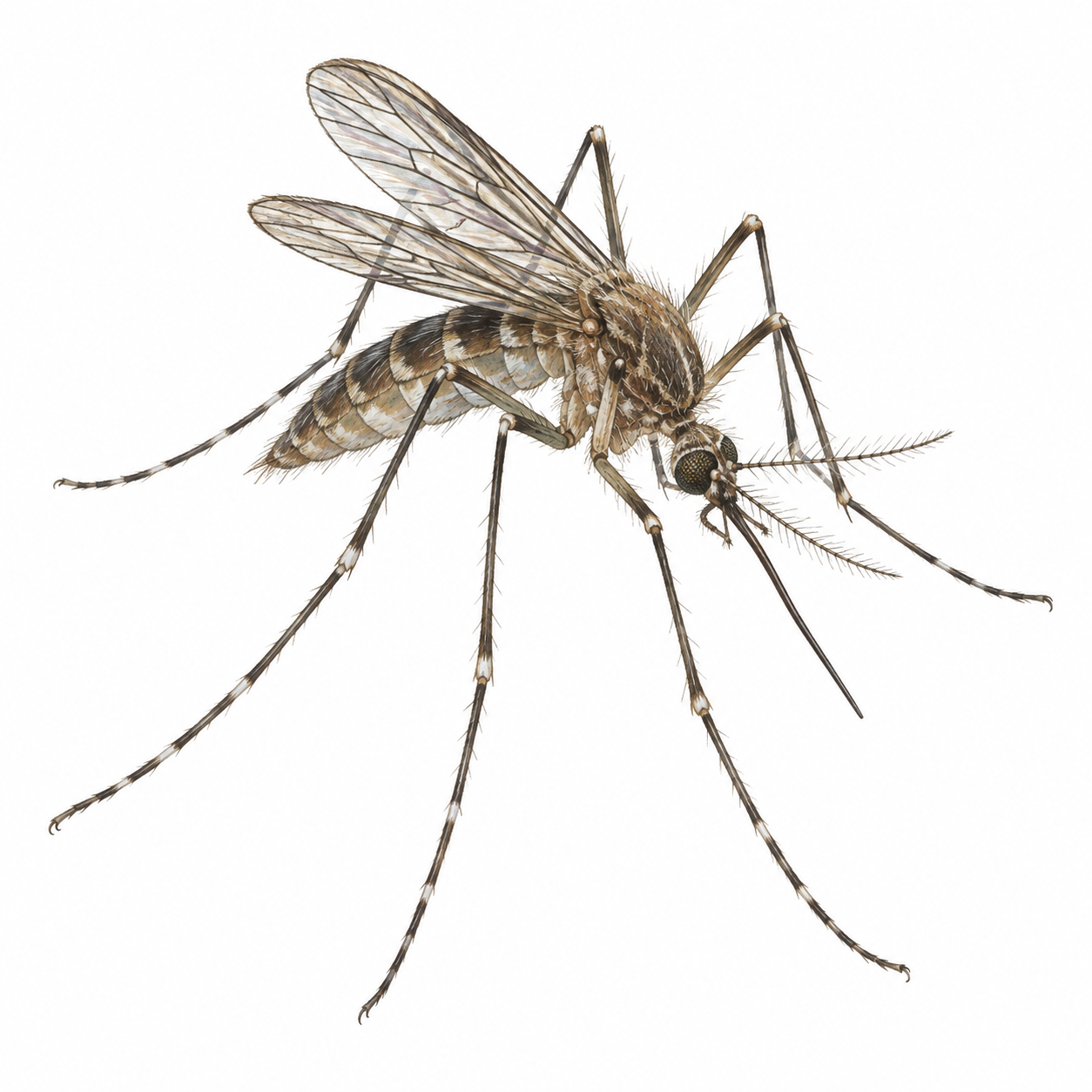
Aedes albopictus is known as the Asian tiger mosquito. It is one of the invasive mosquito species that have spread in Türkiye in recent years. Recognisable by its black-and-white markings, it can be active during the day and adapt to small water collections in urban areas. Aedes aegypti is a different species; the names are not interchangeable.
Why are some people bitten more often?
Mosquitoes use more than one signal to find people. Exhaled carbon dioxide, body heat, skin odours and chemical compounds on the skin can all play a part. Biological differences may make some people more attractive to mosquitoes. There is no single explanation that applies to everyone.
Why do mosquito bites itch and swell?
Female mosquitoes release saliva into the skin while feeding. The immune response can cause raised bumps, redness and itching; some people develop more swelling. Responses vary. Seek medical advice for severe, widespread symptoms or signs of infection.
Why are there mosquitoes at home?
They may enter through open doors and windows, with breeding sites inside or nearby. For some species, even small collections of water in plant saucers, buckets, rainwater containers or unused objects can be enough. Empty and clean these regularly and check insect screens to address both breeding and entry.