LEARN ABOUT PESTS / GUIDES

SILVERFISH

Silverfish are small, wingless insects with tapering bodies. They occur in damp, dark, sheltered places. Start by checking moisture sources and hiding places to reduce their numbers.

Last updated: 7 October 2026

SEE SOLUTIONS
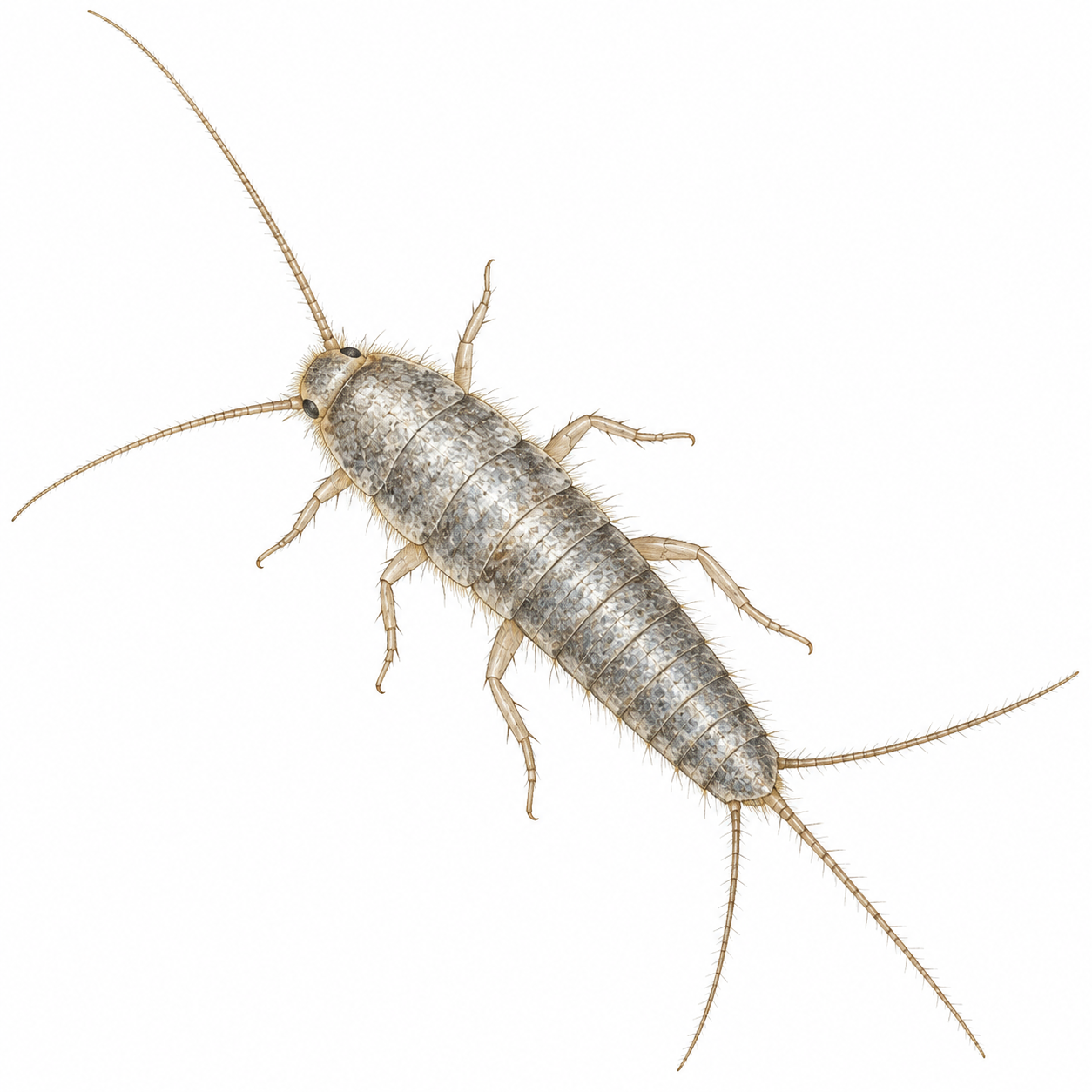
Silverfish: educational scientific illustration showing natural anatomy
SILVERFISH
Stylised anatomical illustration
01

LEARN ABOUT SILVERFISH

How can you recognise it?
A slender, silver-scaled body, two long antennae and three tail-like appendages.
Where is it found?
Bathrooms, beneath sinks, basements and sheltered cracks.
Behaviour
Active at night, hiding during the day.
Type of solution
Moisture control and a suitable surface application.

WHY DOES IT MATTER FOR HEALTH?

Silverfish do not bite people and are not known to be significant disease carriers. The main concern is damage to paper products and some dry foods under suitable conditions. Seeing one insect does not imply a serious health hazard.

Their wingless bodies, long antennae and three slender tail appendages are distinctive. They move quickly and may be seen only briefly; finding an insect in a bathroom alone is not enough to identify it.

They can establish themselves where moisture and shelter are available. Bookbinding glue, starchy materials and some dry foods can provide food. Check paper for surface damage or irregular marks too.

Why does moisture matter?

Leaks, condensation and poor ventilation can create a suitable habitat. Addressing the moisture source matters for lasting control.

Can accumulated cardboard be a problem?

Piles of cardboard and paper can provide shelter. Reduce build-up, especially in damp stores, and keep valuable books dry.

02

HOW CAN YOU PREVENT PROBLEMS?

  1. 01

    Address leaks and condensation; improve ventilation in bathrooms and storage areas.

  2. 02

    Check around pipes and cracks to reduce hiding places.

  3. 03

    Reduce unnecessary cardboard and paper; protect books from damp.

  4. 04

    Store dry foods in sealed containers and clear crumbs from cupboards and floors.

03

HOW DO YOU CHOOSE THE RIGHT PRODUCT?

  1. 01

    Check the target pest

    Check that the label explicitly lists silverfish. A general reference to “pests” does not establish suitability for this target.

  2. 02

    Check the application area

    For this target, choose only surfaces permitted by the label. Do not treat people, animals, food or textiles that directly contact the skin as application areas.

  3. 03

    Read the application instructions

    Compare the target-specific application method and any stated duration. Do not transfer instructions between products or assume unverified durations.

  4. 04

    Check the authorisation details

    Especially when buying online, check the biocidal authorisation number and date, active ingredient and instructions on the back label.

04

SUITABLE PRODUCTS

Choose a silverfish solution according to the target and application area.

Pest-control products from our company’s different brands are listed together by solution type to help you compare options for your needs.

01

SURFACE APPLICATION

Application to authorised surfaces where the target occurs.

05

FREQUENTLY ASKED QUESTIONS

Is a silver-coloured bathroom insect a silverfish?

A silver, wingless body and three tail appendages suggest silverfish. Colour and location alone do not provide a certain identification.

Are silverfish harmful to people?

They do not bite people and are not known to be significant disease vectors. Damage to paper products and some dry foods is the greater concern.

What causes silverfish problems?

Damp, dark hiding places and accessible food can help them establish themselves. Check leaks and moisture first.

Can they damage books and food?

They may feed on book bindings, adhesives, starchy paper products and some dry foods. Keep storage areas clean and dry.

Which product is shown for silverfish?

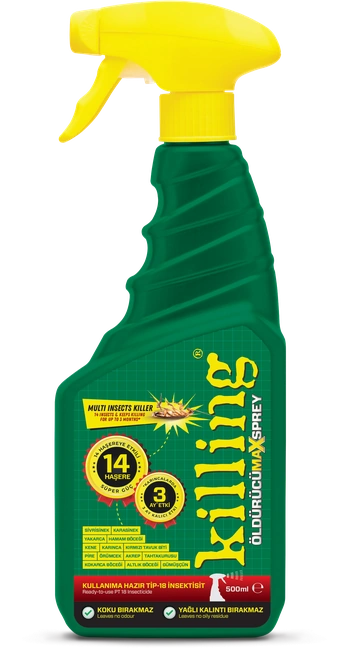
Killing Max Sprey is shown for this pest on surfaces permitted by its label. Do not spray food, books or items people handle indiscriminately.